

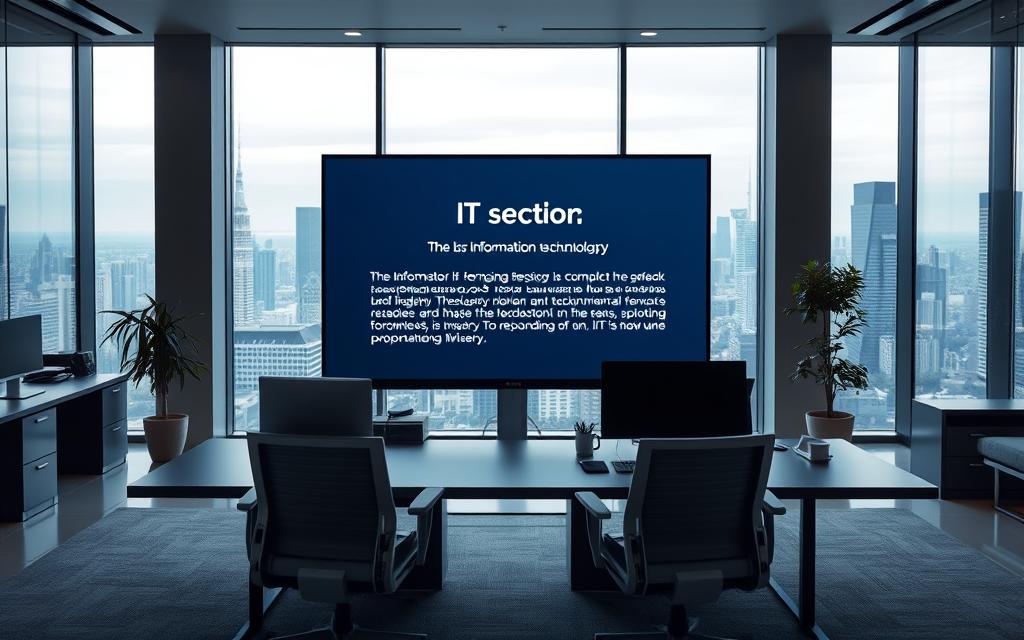
The digital revolution has changed our world. The IT sector is at the heart of this change. It drives global trade, innovation, and our daily lives with advanced systems.
Recent studies by Deloitte Insights and IDC show exciting growth. Tech leaders expect big increases in 2024. Global spending is set to rise by 8 percent. These numbers highlight the sector’s huge economic role and ongoing growth.
The industry covers many areas like making hardware, creating software, and building networks. It also includes cloud services. New fields like AI, cybersecurity, IoT, and data analytics are leading the tech charge.
This detailed technology industry overview will dive into these key areas. It will also look at the trends that are changing them. Knowing about these parts is key to understanding a major economic force.
Defining the Information Technology Industry
The information technology industry is a vast network of technologies, services, and solutions. It drives digital change in every part of society. This field is constantly growing, changing how businesses work and how we use technology.
Core Components and Scope
Today’s IT industry is much bigger than just computers. It covers making hardware, creating software, setting up telecommunications, cloud services, and keeping data safe. It also includes new tech like artificial intelligence and IoT.
This industry touches everything from big business systems to apps for everyone. It shows how deeply technology affects our lives and work.
Analysts at IDC break down ICT spending into many areas. They show where the growth is, like in cloud services, cybersecurity, and digital changes.
Related Posts:
- An Advantage of Cloud Native Technology Scalability…

- What Is Medical Technology All About Innovations in…

- What is GTE Technology? Unlocking Global…
- What Is the Evolution of Technology From Stone Tools to AI

- What Is Galileo Financial Technologies Fintech…
- How to Find the Technology a Website Uses Tools and…
Economic Significance and Global Impact
The IT sector has a huge economic impact. Even when the market goes up and down, tech in the S&P 500 did well in 2022. It did better than many old industries when times were tough.
Deloitte’s “2024 Technology Industry Outlook” says growth will keep going. It shows how important tech is for the world’s economy. The report talks about more money going into making things digital in all kinds of industries.
“Technology is key for business growth and economic progress. ICT spending will keep going strong through 2024 and beyond.”
The ICT market size is getting bigger, thanks to more digital use around the world. This growth means more jobs, better productivity, and a competitive edge for countries investing in digital tech.
The IT industry is the heart of the digital world. It adds a lot to the global GDP and makes other sectors more efficient. From healthcare to education, tech is driving progress and new ideas everywhere.
Hardware: The Physical Foundation
The physical parts of information technology are the real backbone of our digital world. This enterprise hardware includes everything from big data centres to our daily devices. They all rely on advanced semiconductor technology to work.
Computer Systems and Servers
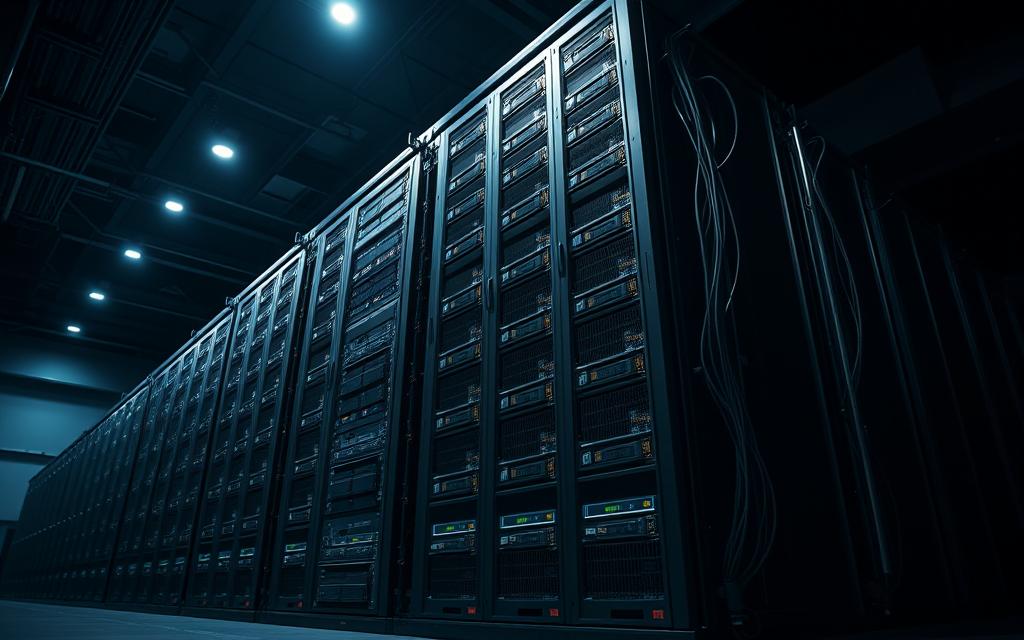
Enterprise computing systems are the heart of modern business. They handle huge amounts of data and support key apps. Server designs keep getting better to handle more tasks.
Big tech companies spend a lot on servers for cloud services and data analysis. IDC says growth in this area will keep going. Keeping these systems running smoothly is key for businesses.
Networking Equipment and Infrastructure
Networking hardware is what lets digital communication flow across companies. Routers, switches, and firewalls are key for data sharing. They make sure devices and systems talk to each other smoothly.
Today’s networking gear handles complex data flows and keeps things secure. As businesses grow online, they invest more in their networks. The physical network is vital, even as cloud services grow.
Peripheral Devices and Consumer Electronics
For most people, the most visible part of IT is end-user hardware. Smartphones, tablets, and computers keep getting better. Market trends show these areas will keep growing.
New devices and tech push demand up. Emerging markets add a lot to global sales. The semiconductor industry is key for making these products.
World Semiconductor Trade Statistics sees the global chip market growing fast. Deloitte’s “2025 global semiconductor industry outlook” talks about new chip designs and making chips better. These changes make hardware more powerful and efficient.
Consumer electronics are getting smarter, with chips for AI and machine learning. This shows how hardware keeps getting better. The physical side of IT is key for digital change in many fields.
Software: The Digital Engine
Hardware gives us the physical base, but software is the digital heart of today’s tech. It includes everything from big business systems to apps we use every day. The world of software is changing fast, thanks to cloud computing and AI.
Enterprise Software Solutions
Today’s businesses need advanced software to stay ahead. Enterprise Resource Planning (ERP) systems have grown from simple accounting tools to all-in-one platforms. Customer Relationship Management (CRM) software helps companies manage their interactions with customers better.
Now, enterprise solutions use cloud technology and AI. Workday shows how ERPs use AI for smart predictions and decisions. These systems give real-time insights into business operations.
Switching to SaaS platforms has changed how businesses use software. These models offer flexibility and lower costs upfront. They also ensure software stays updated and secure.
Consumer Applications and Operating Systems
Consumer software is what most people see every day. Operating systems like Windows and iOS connect us to our devices. They’ve become more advanced while staying easy to use.
Mobile apps have changed how we talk, work, and play. They use the internet and our devices to offer great experiences. The app world is growing, opening new chances for developers and companies.
Now, software is more personal, thanks to AI. It works better with different devices and services. Being able to use apps on all kinds of devices is key for a smooth experience.
Development Tools and Platforms
Software development tools have changed a lot. Integrated Development Environments (IDEs) now offer more features like code completion. Cloud-based environments let teams work together from anywhere.
Today’s development platforms support many programming languages. This lets developers pick the best tools for each project. AI tools in coding are exciting, helping with code suggestions and error checking.
DevOps has changed how software is made. It combines development and operations for faster, better software. Tools like Docker and Kubernetes make deploying apps easier across different environments.
| Software Category | Key Features | Modern Trends |
|---|---|---|
| Enterprise Solutions | ERP, CRM, SCM systems | AI integration, embedded analytics |
| Consumer Applications | Mobile apps, desktop software | Personalisation, cross-platform sync |
| Development Tools | IDEs, version control, testing | AI-assisted coding, cloud-based IDEs |
The world of software development keeps changing with new tech and methods. Low-code and no-code platforms let non-techies make apps easily. This makes software creation more open, letting pros tackle harder tasks.
IT Services and Consulting
The world of information technology has grown beyond just hardware and software. Today, it’s a complex system of professional services. Companies need special help to deal with digital changes, leading to a big demand for tech consulting and support.
Managed Services and Outsourcing
Many businesses team up with managed IT providers to manage their tech needs. This lets companies focus on what they do best while experts handle the tech. It’s a cost-effective way to keep things running smoothly with a set price.
Workday research shows a shift towards roles that do more than one thing. Tech experts now need to know a lot to handle different systems. This approach means they can solve problems without needing a huge team.
“The mix of cloud tech and remote work has made managed services more popular. They offer flexibility and reliability.”
Systems Integration and Implementation
Today’s companies use many systems that need to work together well. Tech consulting firms help by linking old systems with new ones. This is a detailed process that needs careful planning and doing.
Good projects use a set plan but also allow for changes. The best plans mix standard steps with things that are special to the company. This way, systems fit the business needs without losing stability.
| Service Type | Primary Focus | Typical Engagement Model | Key Benefits |
|---|---|---|---|
| Managed Services | Ongoing operational management | Subscription-based | Predictable costs, continuous support |
| Project Implementation | System deployment and integration | Fixed-price or time-and-materials | Structured delivery, defined outcomes |
| Technical Support | Issue resolution and maintenance | Retainer or per-incident | Rapid response, expertise on demand |
Technical Support and Maintenance
Keeping systems running smoothly is key for businesses. Managed IT providers offer different levels of support. This ranges from simple fixes to full system care.
Preventing problems is now more important than fixing them after they happen. Regular checks and updates stop big issues. This shift shows a move towards better, more partnership-like services.
The world of tech consulting needs people with many skills. As systems get more complex, experts must know about different areas. This way, they can solve problems fully.
Telecommunications and Networking
The telecommunications sector is changing fast. It’s key to our digital world, linking businesses, governments, and people. It uses new tech to make data flow smoothly across the globe.

Today’s telecom systems are vital for our digital lives. They support everything from phone calls to cloud computing. The sector’s growth boosts productivity and opens up new chances in many fields.
Wireless and Mobile Technologies
Wireless tech has come a long way. It’s moved from simple cell phones to fast 5G networks. These new networks are much faster and have less delay.
These fast networks are making new tech possible. Things like self-driving cars and remote surgeries are now possible. Experts say 5G could add trillions to the world’s economy by making things more efficient.
Mobile tech is getting better by working with other IT areas. This makes devices, apps, and networks work together better. It’s helping the Internet of Things grow and making data sharing easier.
Broadband and Fibre Optics
Fibre optic tech has changed wired internet. It sends data fast over long distances using light. This is much better than old copper cables.
Today’s fibre optic systems can send data at over 100 gigabits per second. This is great for streaming and cloud services. It’s also good for business networks.
More fibre optic lines are being laid down around the world. This is to bring fast internet to more places. Governments and companies see it as key for the economy, not just a luxury.
Internet Service Providers and Infrastructure
The ISP market includes companies that give us internet. They manage big networks and data centres. These are the heart of the internet.
ISPs are facing new rules because of the importance of internet. New rules aim to make the internet safer. This is for our safety and the economy.
“The reliability and security of our communications infrastructure directly impacts national security, economic prosperity, and public safety.”
Competition is making internet services better. ISPs are also reaching more people. They offer packages that include internet, phone, and cloud services.
ISPs must keep up with new rules and tech. This means spending a lot on infrastructure and keeping data safe. It’s a big challenge.
Data and Analytics
In today’s world, data is seen as a key asset, not just a byproduct. The amount of data is growing fast, expected to hit 182 zettabytes by 2025. This growth has changed how businesses work, making data use and sharing key to success.
Big Data Management and Storage
Handling big data is a big challenge. Companies need to manage data’s volume, speed, and variety. They also must keep data safe and easy to access. New storage systems, like cloud-based ones, help meet these needs.
For good big data management, consider:
- Scalable storage that grows with data
- Rules for data quality and compliance
- Systems for quick data analysis
- Cost-effective solutions that balance price and performance
Business Intelligence and Visualisation
Business intelligence tools turn data into useful insights. These tools help leaders spot trends and opportunities. They make data easy to understand for everyone in the company.
“Without data you’re just another person with an opinion.”
Today’s tools let users explore data in detail. This makes understanding data easier and helps in making better decisions. It’s all about using data-driven insights wisely.
Predictive Analytics and Data Science
Advanced analytics change how companies see the future. Predictive models use past data to predict what will happen. Data science finds hidden patterns in data.
Using these methods involves:
- Gathering and preparing data from different sources
- Choosing and preparing the most important data points
- Training models with the right algorithms
- Testing and using the models
These methods help companies plan ahead. They use data-driven insights to improve operations, customer service, and find new ways to make money.
| Analytics Type | Primary Function | Common Tools | Business Impact |
|---|---|---|---|
| Descriptive Analytics | What has happened? | Traditional BI platforms | Performance reporting |
| Diagnostic Analytics | Why did it happen? | Drill-down analysis tools | Root cause identification |
| Predictive Analytics | What might happen? | Machine learning algorithms | Future trend forecasting |
| Prescriptive Analytics | How can we make it happen? | Optimisation software | Strategic decision support |
Combining these analytics creates a strong framework for business intelligence. As data grows, companies that get good at using it will stay ahead in their markets.
Cloud Computing
Businesses are moving away from owning physical infrastructure. They now use the internet to access computing power on demand. This change is at the heart of cloud computing, bringing flexibility and scalability.

The cloud has three main service models. Each offers different levels of control and management. Companies can pick the model that fits their needs and goals.
Infrastructure as a Service (IaaS)
IaaS lets companies rent IT resources over the internet. They don’t need to buy physical hardware.
The key advantages include:
- No need to spend money on servers
- Scalability during busy times
- Less maintenance work
- Flexibility for operations worldwide
Big names like Amazon Web Services, Microsoft Azure, and Google Cloud Platform lead in IaaS. Many start their cloud migration with IaaS.
Platform as a Service (PaaS)
PaaS gives teams a place to build, test, and deploy apps without worrying about the infrastructure. It speeds up development and simplifies operations.
Teams get:
- Ready-to-use development tools
- Automated deployment
- Scalability features
- Security built-in
This lets developers focus on making apps, not setting up servers.
Software as a Service (SaaS)
SaaS lets users access software through web browsers. It eliminates the need for local installation and maintenance. Users pay for access without worrying about updates or technical issues.
This model is popular in many areas, including:
- Customer relationship management systems
- Office productivity suites
- Accounting and financial software
- Collaboration and communication tools
The market for public cloud services is growing fast. International Data Corporation predicts spending will double by 2028, driven by digital transformation.
Some companies are now moving certain workloads back to private environments. This “cloud repatriation” is due to specific needs like artificial intelligence and data sovereignty.
Financial operations (FinOps) is becoming key for managing cloud costs. As cloud usage grows, organisations are adopting FinOps to:
- Monitor and optimise resources
- Find and cut waste
- Forecast spending
- Match technology spending with business value
The industry is facing a talent shortage. Cloud architects, security specialists, and FinOps practitioners are in high demand as companies speed up their digital transformation.
Cybersecurity
In today’s digital world, cybersecurity is key to protecting organisations from new threats. The cyber threat landscape is changing fast. This means we need strong information security plans to keep up.
New rules from the SEC and DHS show how important good cybersecurity is. These rules help keep our digital world safe.
IBM’s “Cost of a Data Breach” report shows the big costs of cyber attacks. Cybercrime costs are going up fast. So, it’s vital for businesses to stay safe.
They must face new challenges like quantum computing risks. And they need to deal with security debt too.

Network Security and Threat Detection
Today’s network security has many layers to fight off threats. Advanced systems use AI to spot suspicious activity. They check network traffic for signs of trouble.
Teams use firewalls and other systems to protect networks. They also test for weaknesses to stay ahead of threats. This way, they can stop attacks before they start.
Data Protection and Encryption
Keeping data safe needs strong encryption. Encryption has to keep up with new threats, like quantum computing. It’s important to protect data at all times.
Data loss prevention (DLP) stops sensitive info from getting out. These systems watch for and block data leaks. Good key management keeps data safe, even if other defences fail.
“The average cost of a data breach reached $4.45 million in 2023, the highest amount in the report’s history.”
Identity and Access Management
Managing who can access systems is key to information security. Identity and Access Management (IAM) makes sure only the right people can get to certain things. It handles digital identities and access rights across many apps.
Multi-factor authentication (MFA) checks who you are, not just your password. Privileged access management (PAM) controls admin accounts and sensitive areas. Regular checks keep access rights up to date.
The cyber threat landscape keeps changing. We need to keep improving our security. This means investing in good information security plans. We must stay ahead of threats with technology and skilled security teams.
Artificial Intelligence and Machine Learning
Artificial intelligence and machine learning are changing the tech world. They have moved from ideas to tools that drive innovation in many fields. These technologies let systems learn, adapt, and do tasks that humans used to do.

Investment in AI is growing fast. The IDC spending guide says global AI investment will hit over $300 billion by 2026. But, a McKinsey report shows a big gap. While 75% of companies are trying AI, only 15% see real benefits.
Automation and Robotics
AI-driven automation is changing work. Robotic process automation (RPA) does repetitive tasks in many fields. It learns from humans and takes over simple tasks, freeing people for more complex work.
Robots are getting smarter too. They can adapt to new situations, spot defects, and work with humans safely. This has led to smart factories where humans do less work.
Natural Language Processing
Natural Language Processing (NLP) lets computers understand and create human language. It powers chatbots, translation services, and voice assistants. NLP has become very good at understanding context and emotions.
Deloitte says tech companies are leading in AI adoption. AI coding assistants help developers write and improve code faster. They learn from lots of code to suggest better solutions.
Computer Vision and Image Recognition
Computer vision lets machines understand images and videos. It’s used for facial recognition, quality control, and more. This technology is getting better at identifying objects and people.
In healthcare, AI can spot problems in scans that humans miss. Retailers use it for inventory, and car makers for self-driving cars. But, there are big challenges ahead.
The International Energy Agency says training AI models uses a lot of energy. This raises concerns about sustainability. As AI gets more complex, finding ways to use less energy is a big challenge.
| AI Application Area | Primary Benefits | Current Adoption Rate | Key Challenges |
|---|---|---|---|
| Process Automation | Increased efficiency, cost reduction | High (68% of enterprises) | Integration with legacy systems |
| Natural Language Processing | Improved customer service, accessibility | Medium (45% of organisations) | Context understanding limitations |
| Computer Vision | Enhanced quality control, security | Growing (52% in manufacturing) | Data privacy concerns |
| Predictive Analytics | Better decision-making, forecasting | High (61% of businesses) | Data quality requirements |
AI and machine learning are changing the tech world. They promise to unlock new abilities in every tech sector. As companies work to make AI work better, these technologies will become even more part of our lives.
Internet of Things (IoT)
The Internet of Things is a new network where objects get smart through sensors and the internet. This tech lets devices talk to each other, share data, and do tasks on their own.
IoT makes our world smarter, responding to our needs and giving us useful info. It’s changing how we live and work, making it one of the biggest tech breakthroughs today.
Smart Devices and Connected Systems
IoT has turned homes into smart spaces. Smart thermostats learn what we like, and security systems let us check in from anywhere.
These connected devices work together smoothly. Voice assistants manage many gadgets, and smart fridges suggest recipes based on what we have.
“The true power of IoT emerges when devices work together to create solutions greater than their individual functions.”
Smart homes offer many benefits:
- They use energy better, saving us money
- They keep us safe with alerts and remote access
- They make life easier by automating tasks
- They get to know us better, adapting to our habits
Industrial IoT and Manufacturing
Industrial IoT is key to making factories smarter. It uses sensors to watch over equipment and check how well things are made.
This tech helps predict when machines might break down. This means less time stopped and big savings for companies.
Industrial automation gets better with IoT. Robots and sensors work together to keep things running smoothly and catch problems fast.
| IIoT Application | Key Benefit | Impact Measurement |
|---|---|---|
| Predictive Maintenance | Reduced downtime | Up to 25% maintenance cost reduction |
| Asset Tracking | Improved logistics | 20% faster inventory management |
| Quality Control | Higher product standards | 15% defect rate reduction |
| Energy Management | Lower operational costs | 18% energy consumption decrease |
Wearable Technology and Healthcare Applications
Wearable tech is very personal. Fitness trackers and smartwatches keep an eye on our health all the time.
In healthcare, IoT helps care for patients better. It lets doctors keep an eye on patients from afar, making treatment more effective.
These healthcare applications help in many ways:
- They spot health problems early
- They let patients stay home more
- They tailor treatment to each person
- They remind us to take our meds
IoT and healthcare together open up new ways to prevent illness. They let us watch our health closely and give doctors all the info they need.
Emerging Trends Shaping the Future
The world of information technology is changing fast. New innovations are set to change how we use technology. These changes are big, not just small updates.
Quantum Computing Developments
Quantum computing is a big leap forward. It uses qubits, not bits, to process information. Qubits can be in many states at once.
This means quantum computers can solve problems that take regular computers years. Big tech companies and research groups are working hard to make quantum systems real.
Deloitte says companies need to get ready for quantum computing. It will help with things like finding new medicines and understanding the climate. But, it also means new security risks.
Quantum computers could break current encryption. So, we need to create new, safe ways to send information.
Edge Computing and Distributed Systems
Edge computing is about processing data closer to where it’s made. This cuts down on delays and saves bandwidth. It’s important because of more IoT devices and AI.
IDC predicts big growth in edge computing spending. This is because of the need for fast data processing.
Distributed systems help with things like self-driving cars and smart cities. They make things work faster and more reliably. This is because they spread out the work.
Edge computing and 5G work well together. They open up new possibilities for innovation.
5G and Next-Generation Connectivity
5G is more than just fast internet. It has low latency, high bandwidth, and can handle lots of devices. This makes it great for many areas.
5G will change how we use mobile phones and more. It’s just the start of what’s possible.
5G is also good for things like remote surgery and smart buildings. It supports advanced projects in many fields.
Network slicing lets operators create different virtual networks. This means each network can work best for its needs.
Sustainability and Green IT Initiatives
The tech world needs to be more green. Data centres use a lot of power, and this is growing with AI. It’s a big problem.
Green tech aims to use less energy, reduce waste, and use clean energy. Rules like the SEC climate rule make companies report on their green efforts.
Green IT includes many things:
- Designing hardware to use less energy and virtualising servers
- Using new cooling systems for data centres
- Managing devices in a way that’s good for the planet
- Using energy when it’s clean and available
Going green is good for the planet and can save money. It’s a chance for companies to do the right thing and make money at the same time.
Conclusion
The information technology industry is a huge network of sectors that drive global progress. It ranges from basic hardware to advanced artificial intelligence. This field changes how businesses work and grow.
Our IT industry summary shows how each part works together to add value. Current trends focus on strong cybersecurity, centralising data, and using AI wisely. Also, there’s a big push for sustainable tech.
Looking ahead, success will mix new tech with practical use. Companies that set clear goals and adapt to new tech will lead the digital change. The IT field is key to economic growth worldwide.
FAQ
What is the information technology industry?
The IT industry deals with technology systems and services. This includes hardware, software, and more. It’s key for the global economy, driving innovation and growth.
How significant is the IT industry to the global economy?
IT is very important, boosting GDP and creating jobs. It’s growing fast, with more spending expected. It’s vital for today’s economy and society.
What are the core components of the IT industry?
IT’s main parts are hardware, software, and services. This includes computers, software, and IT support. It also covers data, cloud, and cybersecurity.
What role does hardware play in the IT industry?
Hardware is the base of IT, including computers and servers. The chip industry is key, supplying important parts. Demand is rising, driven by new markets.
How is enterprise software evolving?
Enterprise software is moving to cloud and AI. This makes it more flexible and insightful. It helps businesses work better and make smarter choices.
What are IT services and consulting?
IT services help companies use technology better. They include support and integration. Experts need to know many things to help.
How do telecommunications and networking support IT?
Networks and telecoms connect everything. They use wireless and fibre to send data. This is key for all kinds of systems.
Why is data considered a strategic asset?
Data is vital for success. It helps with innovation and understanding customers. It turns into useful insights, guiding business decisions.
What are the main models of cloud computing?
Cloud computing has three main types: IaaS, PaaS, and SaaS. They offer flexible access to resources and apps. There’s a focus on cost and deployment.
Why is cybersecurity critical in IT?
Cybersecurity keeps systems safe from threats. It uses encryption and identity checks. It’s essential for protecting data and trust.
How is artificial intelligence transforming the IT industry?
AI is making IT more efficient and creative. It’s used for many tasks, aiming for better results. It also helps with energy use.
What is the Internet of Things (IoT)?
IoT connects devices, like smart homes and sensors. It enables automation and monitoring. It’s a big source of data for analysis.
What emerging trends are shaping the future of IT?
New trends include quantum computing and edge computing. There’s also a focus on 5G and sustainability. These changes are exciting and important.
How does the IT industry address sustainability?
IT is becoming greener, with efforts to reduce waste and energy use. This is due to regulations and corporate responsibility. It’s about making technology more eco-friendly.
 Marcin Wieclaw