

In vitro fertilisation is a big step forward in reproductive medicine. It gives hope to many who struggle to conceive.
IVF is part of assisted reproductive technology. It involves handling eggs, sperm, or embryos outside the body to help with pregnancy.
This discussion overlaps with advantage cloud native scalability, especially for readers comparing reproductive ivf fertility with similar issues.
Used farming precision agriculture also becomes relevant when this topic is compared with nearby questions around reproductive ivf fertility.
IVF is just one of many fertility treatments. These treatments tackle different reasons for infertility with special medical care.
The field keeps getting better, with new ways to help families grow. Knowing what IVF definition means is key to understanding these amazing medical options.
Understanding Reproductive Technology and Its Significance
Reproductive technology is a big win for medicine, giving hope to those facing fertility issues. It has changed how people build families, helping those who struggle naturally. This field uses science and careful practice to tackle tough fertility problems.
The field is always getting better, with new methods and improvements coming up all the time. Knowing the basics and how these technologies have grown is key for anyone looking into fertility treatments.
Defining Reproductive Technology
Assisted reproductive technology, or ART, involves handling eggs and sperm outside the body. The American Society for Reproductive Medicine defines it as:
Related Posts:
- An Advantage of Cloud Native Technology Scalability…

- How Technology Is Used in Farming Precision Agriculture

- What Is Medical Technology All About Innovations in…

- What Is the Information Technology Industry Key…

- What Is Calypso Technology Capital Markets Software…

- What Is Galileo Financial Technologies Fintech…

“Assisted reproductive technology (ART) is any treatment or procedure that involves a laboratory to help you get pregnant.”
This makes ART different from simpler treatments like just taking medicine. The lab work is key, whether it’s getting eggs, preparing sperm, growing embryos, or transferring them. These steps are the latest in infertility solutions.
ART includes things like in vitro fertilization (IVF), intracytoplasmic sperm injection (ICSI), and frozen embryo transfer. Each method tackles different fertility issues in a controlled lab setting.
The Evolution of Fertility Treatments
The history of IVF started in 1978 with the birth of Louise Brown, the first “test tube baby.” This was a huge step forward in reproductive science.
Early IVF used just one egg, without medicines to get more eggs. Success was low, but it sparked a lot of research and interest.
The 1980s saw big changes, like using medicines to get more eggs. This made getting pregnant much more likely. Also, growing embryos in the lab got better, helping them develop before being transferred.
Later, frozen embryo technology and genetic screening came along. Today’s IVF success rates are much higher, thanks to all this progress.
| Year | Development | Significance | Success Rate Improvement |
|---|---|---|---|
| 1978 | First successful IVF birth | Proof of concept achieved | N/A (Pioneering case) |
| 1980s | Controlled ovarian stimulation | Multiple egg retrieval possible | Increased from |
| 1990s | ICSI technique introduced | Solved severe male factor infertility | Additional 10-15% success for male factor cases |
| 2000s | Vitrification (fast freezing) | Greatly improved frozen embryo survival | Frozen cycle success matching fresh cycles |
| 2010s-present | Comprehensive chromosome screening | Reduced miscarriage rates through embryo selection | 15-20% higher live birth rates per transfer |
These advances show how reproductive medicine has grown from an experiment to a real medical field. Today, scientists are working on even more ways to help people have families.
What Is a Reproductive Technology: IVF Explained
In vitro fertilisation is a top-notch reproductive technology today. It helps many couples by letting them conceive outside the body.
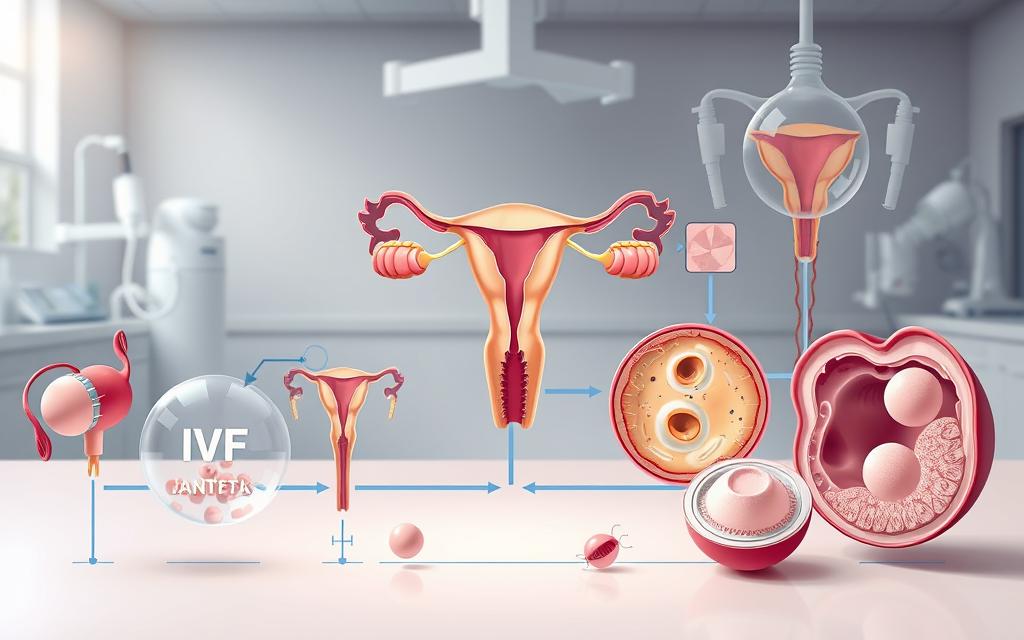
The Science Behind IVF
IVF mixes eggs and sperm in a lab. This lets experts watch and help the fertilisation process.
After the embryos grow, they go into the uterus. This way, many fertility issues are solved.
Key Components of the IVF Process
The in vitro fertilisation process takes about two to three weeks. Each step needs careful timing and medical help for the best results.
Ovarian Stimulation and Monitoring
Medicines make the ovaries produce more eggs than usual. Doctors check this progress with blood tests and scans.
They watch how the eggs grow to pick the best time for egg retrieval. Hormone levels are key to this.
Egg Retrieval and Fertilisation
The egg retrieval procedure is done under sedation. A thin needle gets the eggs from the ovaries through the vagina.
In the lab, the eggs and sperm are mixed. There are two ways to do this:
- Conventional insemination: Sperm and eggs are placed together
- ICSI (Intracytoplasmic Sperm Injection): A single sperm is injected into an egg
ICSI is great for men with low sperm quality or quantity.
Embryo Transfer and Implantation
The last step is putting the embryos into the uterus. This is done with a thin tube through the cervix.
Doctors pick the best embryos for transfer. The number of embryos depends on age and quality.
After embryo transfer, patients wait for implantation. This is when the embryos attach to the uterine lining. It usually happens a few days after transfer.
| IVF Stage | Duration | Key Procedures | Success Indicators |
|---|---|---|---|
| Ovarian Stimulation | 8-14 days | Medication injections, monitoring scans | Multiple mature follicles |
| Egg Retrieval | 30 minutes | Transvaginal ultrasound guidance | Adequate egg quantity and quality |
| Laboratory Phase | 3-6 days | Fertilisation, embryo culture | Successful embryo development |
| Embryo Transfer | 15-30 minutes | Catheter transfer to uterus | Proper embryo placement |
Knowing how does IVF work helps patients understand the process better. Each part is important for success in this advanced technology.
Common Fertility Treatments Beyond IVF
IVF is a big step in reproductive medicine, but there are other treatments too. These options are often the first choice or alternatives for those wanting less invasive methods.
Intrauterine Insemination (IUI)
Intrauterine insemination, or IUI, puts sperm directly into the uterus during ovulation. It helps by getting past the cervix and bringing sperm closer to the egg.
The IUI process includes washing sperm to pick out the most active ones. It’s timed with ovulation, either naturally or with help from drugs. Many couples try IUI before moving to more complex options like IVF.
Ovulation Induction
Ovulation induction helps women with irregular or no ovulation. It uses ovulation drugs to grow and release eggs.
Doctors watch ovulation induction with ultrasound scans and blood tests. This ensures the best timing for trying to conceive or IUI. Finding the right dose is key for success.
Fertility Medications and Their Uses
Fertility medications are key in many treatments. They help with egg development and hormonal balance.
Clomiphene citrate is a common oral medication. It boosts follicle-stimulating hormone production, helping eggs mature.
Injectable gonadotropins give more direct help. They provide follicle-stimulating hormone (FSH) and luteinising hormone (LH). This leads to more eggs developing.
The table below shows common fertility medications and what they do:
| Medication Type | Common Examples | Primary Function | Administration Method |
|---|---|---|---|
| Oral Ovulation Inducers | Clomiphene citrate | Stimulate follicle development | Oral tablets |
| Injectable Gonadotropins | FSH, LH medications | Promote multiple follicle growth | Subcutaneous injections |
| Ovulation Triggers | hCG medications | Initiate final egg maturation | Injectable |
| Hormonal Supplements | Progesterone | Support uterine lining | Oral, vaginal, injectable |
Doctors mix these medications based on each person’s needs. They adjust dosages and plans to work best while keeping risks low. The right mix of ovulation drugs can greatly increase chances of getting pregnant.
Indications for IVF and Fertility Treatments
There are many reasons why people might need fertility treatments. These include clear medical conditions and cases where the cause is not known. Knowing the reasons for IVF helps both patients and doctors choose the best treatment.
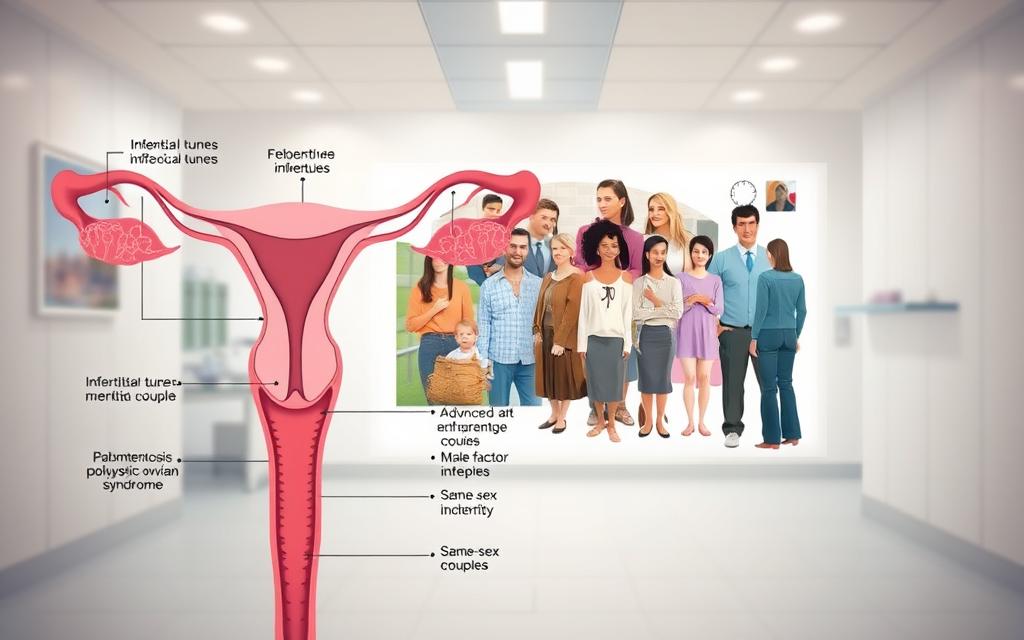
Female Factor Infertility
Many women face fertility issues that lead to IVF. These problems often involve the reproductive system not working right.
Some common female issues include:
- Tubal factor infertility from damaged or blocked Fallopian tubes
- Ovulation problems like polycystic ovary syndrome (PCOS)
- Endometriosis that affects how the reproductive organs work
- Uterine fibroids or other shape problems
- Effects from past surgeries like tubal ligation
IVF is often the best choice for these issues. It helps get around many physical barriers to making a baby.
Male Factor Infertility
Male factor infertility is a big problem, affecting about 40-50% of fertility issues. Issues with sperm can vary a lot.
Key male problems are:
- Low sperm count (oligospermia)
- Sperm that don’t move well (asthenospermia)
- Abnormal sperm shape (teratospermia)
- No sperm in the semen (azoospermia)
IVF with ICSI can help these male factor infertility issues. It involves directly putting sperm into eggs.
Unexplained Infertility and Recurrent Pregnancy Loss
When tests can’t find why a couple can’t conceive, it’s called unexplained infertility. This is a big problem for 15-30% of couples trying to get pregnant.
IVF is a good way to find and treat these issues. It can show problems with egg quality, fertilization, or embryo growth.
IVF is also used for women who keep having miscarriages. Genetic testing of embryos can help find ones that are likely to implant and grow.
IVF is also used for non-infertility reasons. For example, to preserve fertility before treatments like chemotherapy that can harm reproductive health.
The IVF Treatment Process Step by Step
Understanding IVF treatment step by step can make patients feel more confident and clear. The journey has three main parts: a detailed check-up, the treatment cycle, and the lab work.
Initial Consultation and Diagnostic Testing
The first step is a thorough check-up to make a treatment plan just for you. This starts with tests to find any issues that might affect success.
Tests include blood tests to check your egg count and ultrasound scans to count follicles. These help decide how much medication you need and how you might respond.
Other important tests are semen analysis to check sperm quality, disease screening for both partners, and a uterine check to make sure the uterus is ready for an embryo.
| Diagnostic Test | Purpose | Timing |
|---|---|---|
| Ovarian Reserve Testing | Assess egg quantity and quality | Cycle days 2-4 |
| Semen Analysis | Evaluate sperm count and motility | Before treatment begins |
| Infectious Disease Screening | Ensure safety for all parties | Initial consultation |
| Uterine Evaluation | Check uterine cavity health | Pre-treatment phase |
Treatment Cycle Timeline and Protocols
The IVF treatment lasts about 2-3 weeks, following a precise plan. It starts with fertility meds to grow many follicles.
Tests and scans track how you’re doing. When follicles are ready, a trigger shot gets eggs ready for retrieval.
Egg retrieval happens about 36 hours after the trigger, under sedation. It takes 20-30 minutes, then eggs go to the lab.
Embryo transfer happens 3-5 days later, based on how the embryo grows. Some choose to freeze embryos for later.
Laboratory Procedures and Embryology
The lab is the heart of IVF, where fertilisation and early growth happen. It needs special equipment and skilled people.
Technicians use advanced incubators to keep the right conditions for growth. This helps the embryo grow like it would in the womb.
Microscopes let embryologists check egg maturity and fertilisation. They also watch how embryos grow every day. The culture media gives them the nutrients they need.
Quality control is key to success. Skilled embryologists choose the best embryos based on how they look and grow.
The lab work ends with either transferring embryos or freezing them for later. This unseen work is vital for IVF success.
Success Rates and Factors Influencing Outcomes
Getting pregnant with IVF depends on many things. Medical and personal factors play a big role. Knowing these helps patients understand what to expect and make better choices.
Understanding IVF Success Statistics
Clinics look at IVF success rates by how many live births there are per cycle. This is more accurate than just looking at positive pregnancy tests. Success rates can differ a lot between clinics and patients.
When looking at clinic data, consider:
- The age of patients treated
- The clinic’s experience with certain fertility problems
- If rates include both fresh and frozen embryo transfers
- The number of cycles in the statistics
Experts say:
“Your chances of having a healthy baby with IVF depend on many things, like your age and the cause of infertility.”
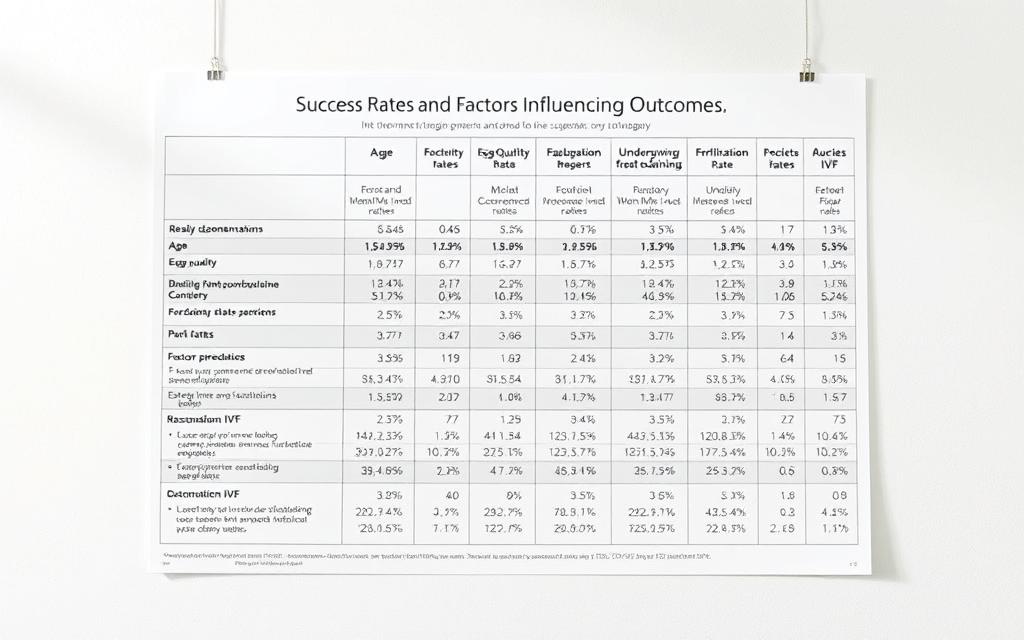
Patient Age and Ovarian Reserve
The link between age and fertility is very important. As women get older, their fertility drops, affecting egg quality and quantity.
Checking ovarian reserve AMH levels is key. It shows how ovaries might react to stimulation. This, along with antral follicle count (AFC), gives insight into egg supply.
Studies show that getting the right number of eggs (up to 15) is linked to better live birth rates. But, for older patients, the quality of eggs matters more than the number.
Lifestyle Factors and Optimising Chances
There are things you can change to help improve IVF success rates. These changes can improve reproductive health and how well you respond to treatment.
Important lifestyle factors include:
- Keeping a healthy body mass index (BMI)
- Avoiding tobacco and drinking less alcohol
- Managing stress well
- Eating a balanced, nutrient-rich diet
Talking to your fertility specialist is key. They can give advice tailored to you, based on your situation and medical history.
Risks and Considerations of Fertility Treatments
Fertility treatments offer hope to many couples. But, it’s important to know the challenges they face. Understanding the IVF risks and other considerations helps make informed decisions.

Medical Risks and Side Effects
Fertility treatments have physical risks that need careful thought. Ovarian Hyperstimulation Syndrome (OHSS) is a serious issue. It happens when ovaries swell and hurt from fertility meds.
Other risks include multiple pregnancies, which can harm both mother and babies. Fertility meds can also cause side effects like bloating and mood swings.
There are also risks of ectopic pregnancy, miscarriage, and birth complications. Though rare, knowing about these risks is key to preparing for treatment.
| Medical Complication | Frequency | Prevention Strategies |
|---|---|---|
| Ovarian Hyperstimulation Syndrome (OHSS) | 1-5% of cycles | Careful medication dosing, monitoring |
| Multiple Pregnancy | 20-30% of IVF pregnancies | Single embryo transfer |
| Ectopic Pregnancy | 2-5% of IVF pregnancies | Early ultrasound monitoring |
| Infection from Procedure | Less than 1% | Sterile technique, antibiotics |
Emotional and Psychological Aspects
The emotional impact of IVF is a big part of treatment. Many underestimate its effects. The ups and downs of hope and disappointment can be tough.
People often feel anxious, depressed, and stressed in their relationships. The uncertainty and repeated procedures can be emotionally draining.
Professional counselling and support groups are great resources. Recognising the psychological side of fertility treatment is key to good care.
Financial and Ethical Considerations
The cost of fertility treatment is a big barrier for many. IVF cycles can cost between $10,000 and $15,000. There are also extra costs for medications and procedures.
Insurance coverage varies a lot, leaving many to pay a lot out of pocket. Planning your finances is important when starting treatment.
Ethical decisions are also important. These include what to do with unused embryos, genetic testing, and selective reduction in multiple pregnancies. These choices need careful thought with medical providers and partners.
It’s important to consider all aspects—medical, emotional, financial, and ethical—when starting fertility treatments. Understanding these fully helps prepare better and have realistic expectations.
Advances and Future Directions in Reproductive Technology
The world of reproductive medicine is changing fast. New discoveries are making treatments better and opening up new possibilities. These IVF advances are some of the most exciting in healthcare, giving hope to many.

Innovations in IVF Techniques
IVF labs are now using advanced tech to pick the best embryos. Time-lapse imaging is a big step forward. It lets experts watch embryos grow without disturbing them.
This tech gives insights into how embryos develop. It helps choose the best ones for implantation. Vitrification has also improved, making frozen embryos and eggs more likely to survive.
Other key advancements include:
- Advanced culture media that better mimic natural reproductive environments
- Improved incubator systems with superior environmental control
- Enhanced sperm selection techniques for male factor infertility
Genetic Testing and Screening
Genetic tests have changed how we check embryos. Preimplantation Genetic Testing (PGT) offers insights into embryo health and genetics.
PGT-A checks for chromosomal issues, a common cause of failed implants and miscarriages. PGT-M looks for specific genetic conditions, helping families with hereditary diseases.
These tests have sparked debates in the medical field. They provide valuable info but need careful discussion to understand their limits and benefits.
Emerging Technologies and Research
New technologies are on the horizon, promising to change fertility treatments. Research into in vitro maturation (IVM) of eggs could make treatments more accessible.
Stem cell research aims to create artificial gametes, helping those without eggs or sperm. Uterine regeneration and transplantation could help women with certain infertility issues.
These new areas show how fast reproductive medicine is evolving. The future of ART will offer more tailored treatments for each patient.
| Technology | Current Application | Future Potential | Considerations |
|---|---|---|---|
| Time-Lapse Imaging | Embryo selection improvement | AI integration for prediction | Cost and accessibility |
| PGT Testing | Chromosomal screening | Comprehensive genetic analysis | Ethical implications |
| IVM Technology | Limited clinical use | Reduced medication protocols | Success rate optimisation |
| Artificial Gametes | Research phase | Treatment for absolute infertility | Regulatory approval |
For more on these technologies in practice, check out our guide to infertility treatments and advances. It covers current uses and what patients need to know.
The fast pace of innovation in reproductive tech is opening up new ways to build families. As research continues, these IVF advances will get better, more accessible, and part of standard care, helping patients worldwide.
Conclusion
This IVF summary shows how complex and powerful assisted reproductive technology is. Knowing your options is vital when facing reproductive health issues.
When picking fertility treatment, think about success rates, risks, and your personal situation. Talk to experts to create a plan that suits you.
Thanks to technology, there’s hope for those struggling with infertility. This gives individuals and couples the chance to become parents. Stay updated and get support for the best results.
FAQ
What is Assisted Reproductive Technology (ART)?
ART is a medical way to help people get pregnant. It uses eggs, sperm, or embryos outside the body. This includes IVF and is more complex than simple fertility treatments.
How has IVF evolved from its first use?
IVF has changed a lot. The first baby was born in 1978. Now, we use better ways to get eggs and make embryos. This has led to more babies being born.
What are the key stages of the IVF process?
IVF starts with making eggs grow. This is watched with ultrasound and blood tests. Then, eggs are taken out, fertilised in the lab, and put back in the uterus.
What fertility treatments are available beside IVF?
Other treatments include IUI and Ovulation Induction. IUI puts sperm directly in the uterus. Ovulation Induction uses medicine to help eggs grow.
Who might benefit from IVF or other fertility treatments?
IVF helps many people. This includes those with problems like damaged tubes or low sperm count. It also helps those who can’t get pregnant and want to save their fertility before treatments.
What does the patient journey through an IVF cycle involve?
The journey starts with tests and a first meeting. Then, there’s a 2–3 week cycle of making eggs grow, taking them out, fertilising them, and putting them back in. The whole time, everything is closely watched.
How are IVF success rates measured, and what influences them?
Success is measured by how many live births there are. Age and how many eggs a woman has are big factors. Lifestyle choices like diet and smoking also play a part.
What are the risks associated with fertility treatments?
Risks include serious health problems and emotional stress. There’s also the cost and deciding what to do with unused embryos. These are big decisions.
What advancements are shaping the future of reproductive technology?
New things like time-lapse imaging and better freezing methods are coming. Genetic testing and research into new ways to make babies are also exciting.
How does Intrauterine Insemination (IUI) differ from IVF?
IUI is simpler and less invasive. It involves putting sperm in the uterus at the right time. IVF is more complex and involves taking eggs out and fertilising them in the lab.
What role do fertility medications play in treatment?
Medications like Clomiphene Citrate and Gonadotropins help make eggs grow. They’re key in both IUI and IVF.
Can IVF be used for fertility preservation?
Yes, IVF is used to save fertility. It’s great for people facing treatments that could harm their ability to have children. Eggs or embryos can be frozen for later.
What is Preimplantation Genetic Testing (PGT), and why is it used?
PGT tests for genetic problems in embryos. It helps choose the best embryos for a healthy pregnancy. But, it raises ethical questions.
How important is mental health support during fertility treatment?
Mental health support is very important. Fertility treatments can be very stressful. Counselling and support groups help manage this stress and improve well-being.
 Marcin Wieclaw