

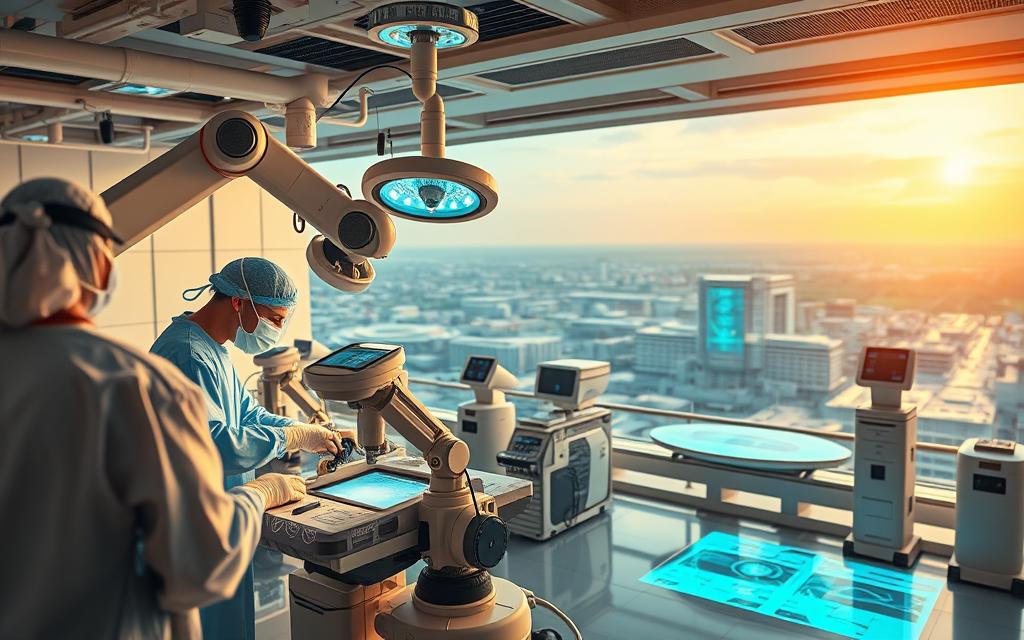
Modern healthcare technology is changing how we care for patients and do medicine. It brings better results through smarter ways and easier processes.
The Deloitte Center for Health Solutions says true innovation means getting more for less. This idea leads to better value, results, and access. It also cuts costs and makes things simpler.
Today’s medical innovations change how doctors diagnose and treat patients. They offer new ways to care for people and make things more efficient.
These technologies include digital tools and advanced treatments. They make healthcare better and more accessible. They show the future of medicine, focusing on quality care and being sustainable.
The Evolution of Medical Technology Through History
Medical technology has come a long way, from simple tools to advanced digital systems. These changes have greatly improved patient care. They show how innovation meets clinical needs, leading to better healthcare over time.
Early Medical Instruments and Their Development
The history of medical technology starts with basic tools. The stethoscope, invented in 1816, was a big step forward in diagnosis. Also, the late 19th century saw the introduction of sterilised surgical tools, cutting down on infections.
These early tools came from doctors’ observations and practical needs. They improved their work by making small changes. For example, the scalpel got more precise over time, thanks to doctors’ hands-on experience.
The Digital Revolution in Healthcare
The late 20th century saw a big change with the digital health revolution. Computers made electronic health records possible, replacing old paper systems. This made patient data easier to access and reduced mistakes.
Related Posts:
- What Is the Information Technology Industry Key…

- What Is Galileo Financial Technologies Fintech…

- What Is a Reproductive Technology IVF and Fertility…
- How Technology Is Used in Farming Precision Agriculture

- What Is Calypso Technology Capital Markets Software…

- De Nora Water Technologies Careers Opportunities in…

Telemedicine also became important during this time. It allowed doctors to consult with patients remotely. This was a big help for those living far from city hospitals.
Key Milestones in Medical Technology Advancement
There have been many key moments in medical technology. Wilhelm Röntgen’s discovery of X-rays in 1895 changed how doctors could see inside the body. This led to more imaging technologies like CT and MRI scans.
The 1960s saw the introduction of beta-blockers, a big step in treating heart conditions. These drugs allowed for non-surgical treatments, making heart care safer. Testing methods also got better, ensuring these drugs were safe and effective.
Minimally invasive surgeries are another big leap forward. They reduce recovery times and improve surgery results. Laparoscopic surgery, introduced in the 1980s, is a great example of this.
Today, we’re seeing even more changes with artificial intelligence and machine learning. These technologies are making diagnosis better. Medical technology will keep changing, improving healthcare for the future.
Understanding What Medical Technology Is All About
Medical technology is a field where new ideas meet healthcare needs. It creates solutions that help patients and change how doctors work. This area uses many sciences to solve big medical problems with new technology.
Defining the Scope of Medical Technology
The scope of medical technology covers a wide range of tools and systems for health care. It includes simple tools and complex machines like imaging systems and robots.
NCBI research shows how medical technology is developed. It involves several steps:
- Starting with a new idea and making a prototype
- Testing it in real-world settings
- Getting approval from health authorities
- Using it in hospitals
- Improving it based on feedback
This detailed process makes sure technologies are safe and meet health needs before they reach patients.
The Intersection of Medicine and Engineering
The mix of medicine and engineering is key to new health care ideas. Engineers use their skills in materials and electronics. Doctors add their medical knowledge.
This team effort has led to big advances:
| Engineering Discipline | Medical Application | Key Innovation |
|---|---|---|
| Mechanical Engineering | Surgical Robotics | Precision instrument control |
| Electrical Engineering | Medical Imaging | High-resolution scanning technology |
| Software Engineering | Diagnostic Systems | Real-time data analysis algorithms |
| Biomedical Engineering | Prosthetic Devices | Neural interface technology |
For medicine and engineering to work well together, they need to talk and share ideas. This ensures new technologies really help in health care.
Core Components of Modern Medical Technology Systems
Today’s medical technology systems have key parts that work together. These parts make sure health care works well and safely.
The main parts are:
- Hardware design – The physical parts and tools
- Software integration – The systems that control and process data
- Clinical validation – Testing to see if it works in real health care
- User interface design – Making it easy for doctors to use
- Data security – Keeping patient information safe
Each part goes through careful development and testing. NCBI says that testing in real health care settings is very important. It makes sure technologies are ready for use in hospitals.
As science and engineering keep getting better, medical technology grows. This leads to more advanced and helpful health care solutions.
Diagnostic Technologies Transforming Patient Care
Diagnostic technologies are at the forefront of healthcare innovation. They offer new ways to detect diseases early and accurately. This leads to better health outcomes and more efficient care, fitting the shift towards value-based care.
Advanced Imaging Systems: MRI and CT Scanners
MRI and CT scanners have changed how we diagnose without surgery. They show detailed views of inside the body. This helps doctors spot problems with great accuracy.
MRI uses strong magnets and radio waves for clear images of soft tissues. CT scanners use X-rays to show 3D views of organs, bones, and blood vessels.
These systems also help track how diseases progress and if treatments work. This is thanks to advanced software that compares scans over time.
| Imaging Technology | Primary Applications | Key Advantages | Considerations |
|---|---|---|---|
| MRI Scanner | Brain disorders, joint injuries, spinal conditions | No radiation exposure, superior soft tissue contrast | Longer scan times, contraindicated for certain implants |
| CT Scanner | Trauma assessment, cancer detection, vascular imaging | Rapid acquisition, excellent bone detail | Radiation exposure, contrast agent requirements |
| PET-CT Fusion | Oncology staging, neurological disorders | Metabolic and anatomical data combination | Higher cost, specialised radiopharmaceuticals needed |
Point-of-Care Testing Devices
Point-of-care testing (POCT) devices have made testing faster and more accessible. They bring lab-quality tests to the patient’s side. This means results come quickly, helping doctors make fast decisions.
POCT devices test for many things like blood sugar, heart markers, and infections. They give doctors the results they need right away. This is very important in emergency situations.
“The integration of point-of-care diagnostics represents a paradigm shift in healthcare delivery, moving from centralised testing to immediate, actionable results at the point of patient interaction.”
These devices are getting better and more connected. Many can send data wirelessly. This updates health records and connects with other systems easily.
Genomic Sequencing Technologies
Genomic sequencing is changing medicine by looking at a person’s genes. It helps doctors make better treatment plans. New technology can read entire genomes in days, finding genes linked to diseases.
This is very important in cancer treatment, where it helps choose the right therapy. It also helps find genetic disorders and tailor medicine to each person.
Genetic testing is getting cheaper and faster. This makes it more available. It’s a big step forward in medicine, helping people manage their health based on their genes.
Using genetic medicine needs special skills and support. Experts are needed to understand and use the genetic data. This ensures the right treatment and care for each patient.
Therapeutic Innovations Revolutionising Treatment
Diagnostic technologies have changed how we find health problems. Now, new treatments are changing how we fix them. These new methods offer better care by being more precise and tailored to each person.
Deloitte’s innovation framework shows these technologies are a big step forward. They offer better results and work more efficiently. This is a big change from old surgery methods to today’s advanced systems.
Robotic Surgery Systems: da Vinci Surgical System
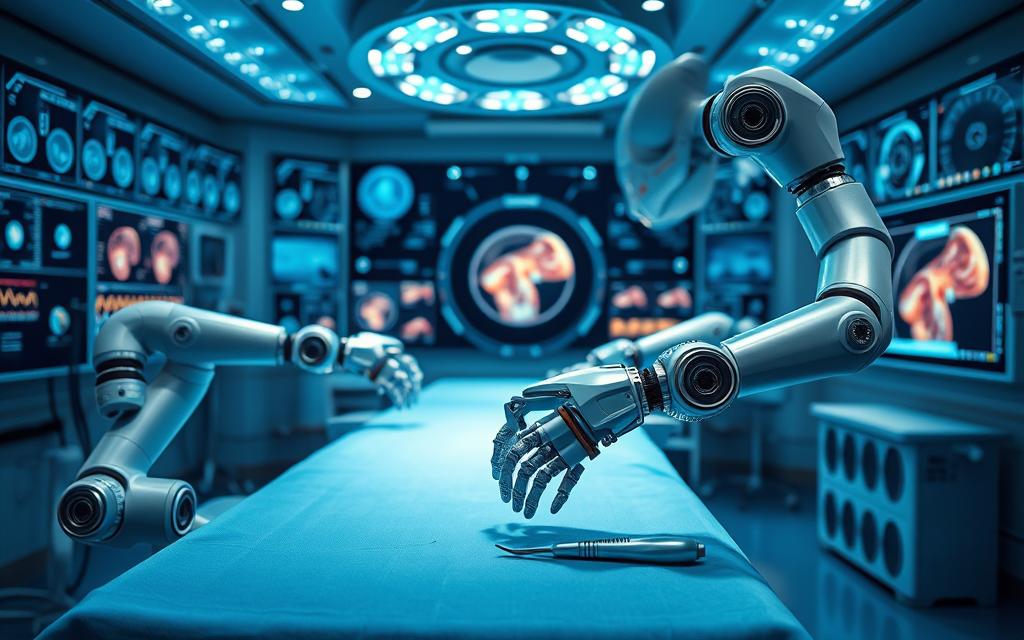
The da Vinci Surgical System is a big leap in therapeutic innovations. It lets surgeons do complex surgeries with great accuracy through small cuts.
Robotic systems are different from old surgery. They offer:
- 3D high-definition vision systems
- Wristed instruments that bend and rotate far beyond human hand capabilities
- Tremor filtration for steady instrument control
- Scaled movements for improved precision
NCBI publications show how surgery has changed. Now, we can do complex heart, urology, and gut surgeries with less blood loss. Patients stay in hospital less and recover faster.
Targeted Drug Delivery Technologies
Targeted drug delivery systems are another big step in therapeutic innovations. They make sure medicines go to the right place and avoid the rest of the body. These systems use different ways to get drugs to the right tissues or cells.
Today’s targeted delivery includes:
- Liposomal encapsulation for cancer therapies
- Monoclonal antibody-drug conjugates
- Polymer-based controlled release systems
- Stimuli-responsive release mechanisms
These systems cut down side effects and make treatments work better. For cancer patients, it means more medicine at the tumour site and less harm to healthy cells. Deloitte’s report shows how these innovations improve treatment without harming patients.
Advanced Radiation Therapy Equipment
Radiation therapy has also changed a lot. New equipment gives precise doses and protects healthy tissue. These systems use advanced imaging and computer guidance for better accuracy.
Key improvements are:
- Intensity-modulated radiation therapy (IMRT) for dose shaping
- Image-guided radiation therapy (IGRT) for real-time targeting
- Stereotactic body radiation therapy (SBRT) for high-precision treatment
- Proton therapy for improved dose distribution
These technologies let radiation oncologists treat tumours with great precision, even near important organs. The move from simple X-ray therapy to today’s systems shows how medical tech is changing treatment for the better.
Together, robotic surgery, targeted delivery, and advanced radiation technologies are leading the way in treatment. They show how combining engineering precision with medical knowledge creates new treatment options that were once impossible.
Digital Health and Telemedicine Platforms
The way we get healthcare has changed a lot, thanks to digital health. Telemedicine is now key in medical care. It has become even more important during global health crises, showing its value in keeping care going.
Doctors have played a big role in making these technologies better. They make sure these tools work well in real life. They also make healthcare easier to get and more personal.
Electronic Health Records Systems
Electronic Health Records (EHR) systems have changed how we store and use medical info. They replaced old paper records with digital ones. Doctors can now access this info safely.
Today’s EHR systems let doctors see patient data in real time, anywhere. This helps avoid doing the same tests twice. It also helps doctors work better together on patient care.
The pandemic showed how important good EHR systems are. They help switch to remote care quickly. Now, they have features like alerts for medicine problems and tools to predict patient risks.
Remote Patient Monitoring Solutions
Remote monitoring lets us track patient health from home. It’s great for managing long-term conditions like diabetes and heart disease.
These devices send important health info to doctors in real time. This means doctors can act fast if something looks off. It might even stop some hospital visits.
The table below shows what modern remote monitoring can do:
| Monitoring Type | Data Collected | Clinical Applications | Patient Benefits |
|---|---|---|---|
| Cardiac Monitoring | Heart rate, rhythm, ECG | Arrhythmia detection, post-surgery care | Reduced clinic visits, early warning |
| Glucose Monitoring | Blood sugar levels, trends | Diabetes management, insulin adjustment | Fewer finger sticks, better control |
| Respiratory Monitoring | Oxygen saturation, breathing rate | COPD management, sleep apnea | Home-based care, comfort |
| Activity Tracking | Steps, movement patterns, sleep | Rehabilitation, elderly care | Motivation, independence |
Mobile Health Applications and Wearables
Mobile health apps and wearables let patients take charge of their health. They can remind you to take medicine or even help diagnose problems with your phone.
Wearables have grown from just tracking fitness to monitoring health seriously. They can do things like check your heart or blood oxygen levels. They even send alerts if you fall.
Linking these personal devices with healthcare systems is a big step forward. It lets patients share health data with doctors. This makes health talks more informed.
These digital health tools are getting better, thanks to AI. They’re becoming more personal and easy to use. The future looks bright for how we get healthcare.
Artificial Intelligence in Medical Diagnostics
Artificial intelligence is changing healthcare in big ways. These advanced systems are making diagnosis and treatment planning better. They offer high accuracy and work fast.
Machine Learning for Medical Image Analysis
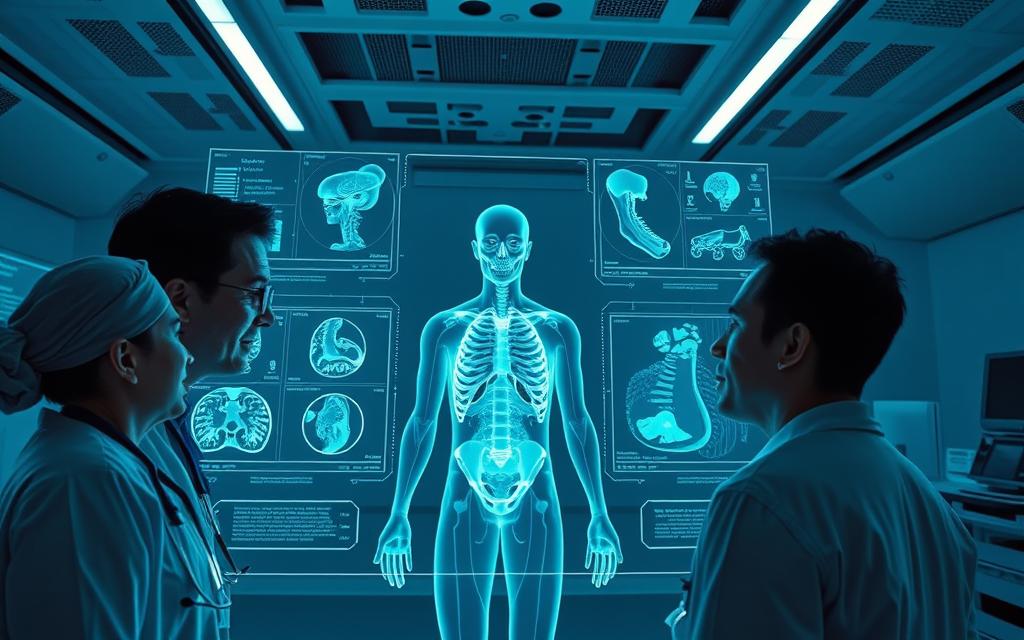
Machine learning is great at looking at medical images. It spots things that humans might miss, like in radiology and pathology.
Convolutional neural networks are experts at seeing images. They can find tumours, fractures, and more in X-rays, MRIs, and CT scans. They’re as good as doctors at this.
AI-Powered Diagnostic Assistance Tools
AI helps doctors make decisions with clinical decision support systems. These tools compare patient data with huge medical databases. They suggest diagnoses and tests.
These systems get better with time, learning from new cases. They create a dynamic diagnostic ecosystem. This system uses all the knowledge it has while staying focused on each patient.
Predictive Analytics in Patient Care
Predictive analytics is another area where AI shines. It looks at patient data to predict how diseases will progress. This helps doctors plan better.
Hospitals use AI to spot patients who might get worse. This lets them act early. AI also helps predict who might need to go back to the hospital and how to treat them best.
AI is also used for looking at health trends in whole communities. This helps health organisations plan better. They can focus on prevention and use resources wisely.
Regenerative Medicine and Biotechnology
Medical innovation is growing fast with regenerative medicine and biotechnology advancements. These areas are changing healthcare by fixing, replacing, or growing human cells and organs. They are making new things possible in medicine.
Stem Cell Therapies and Applications
Stem cell therapies use the body’s repair tools to treat many diseases. These special cells can turn into different types, helping with degenerative diseases.
They are used in:
- Bone marrow transplants for blood cancers
- Cartilage regeneration for joint injuries
- Cardiac tissue repair after heart attacks
- Neurological disorder treatments
Stem cells might help with Parkinson’s disease, spinal cord injuries, and diabetes. They could change how we treat diseases, moving from just managing symptoms to fixing the problem.
3D Bioprinting of Tissues and Organs
3D bioprinting makes living tissues layer by layer with human cells. It’s a big step towards solving the organ shortage and reducing transplant rejection.
The steps are:
- Creating a digital model of the tissue or organ
- Preparing bio-inks with living cells
- Printing precise structures using specialised printers
- Maturing the printed tissue in bioreactors
While full organ printing is new, skin, cartilage, and blood vessels have been made. This could lead to custom transplants using a patient’s own cells.
Gene Editing Technologies: CRISPR-Cas9
CRISPR-Cas9 is like molecular scissors for DNA. It lets scientists edit genes with great precision.
It’s used for:
- Correcting genetic mutations that cause diseases
- Developing targeted cancer therapies
- Creating disease models for research
- Engineering immune cells to fight cancers
It could help with inherited diseases like sickle cell anaemia and muscular dystrophy. But, we must think carefully about ethics as we use this technology.
These biotechnology advancements are starting a new chapter in medicine. They aim for treatments that fix problems, not just manage symptoms. The future of regenerative medicine looks bright, promising to change how we deal with chronic and genetic diseases.
Medical Device Innovation and Development
Healthcare is changing fast thanks to new medical technology. Medical devices are key in improving patient care and treatment results. We’ll look at three important areas of innovation in medical devices.
Implantable Medical Devices
Implantable medical devices are top-notch in medical device innovation. They work inside the body for a long time, helping patients.
Examples include pacemakers, insulin pumps, and neurostimulators. These implantable devices check body functions and help when needed. Making them safe and effective takes a lot of research and testing.
Today’s implantable devices use new materials to fit better in the body. They also have wireless tech, so doctors can check on them and patients from afar.
Minimally Invasive Surgical Instruments
There’s a big move towards less invasive surgery. This has led to new tools that help doctors do complex surgeries with small cuts. This makes patients heal faster and with less pain.
Laparoscopic tools, endoscopes, and robotic surgery systems are part of this. The PTCA catheter is a great example. It changed heart care by letting doctors open blocked arteries without big surgery.
These tools use fibre optics, tiny cameras, and special joints. They give doctors better views and more control during surgery.
Smart Medical Equipment Integration
Smart tech in medical gear is the next big thing in healthcare. These systems mix old medical devices with new digital tech and data analysis.
Smart pumps, connected ventilators, and IoT systems can talk to health records and hospital systems. This lets them collect data in real time, make changes automatically, and send alerts for maintenance.
Getting these systems approved is tricky. Regulators have to check if they’re safe and secure before they can be used.
| Device Category | Key Innovations | Patient Benefits | Regulatory Considerations |
|---|---|---|---|
| Implantable Devices | Biocompatible materials, wireless monitoring | Continuous therapy, reduced hospital visits | Long-term safety data, material compatibility |
| Minimally Invasive Instruments | Precision articulation, enhanced imaging | Faster recovery, less scarring | Procedure-specific testing, surgeon training |
| Smart Equipment Integration | IoT connectivity, data analytics | Personalised treatment, early intervention | Cybersecurity, data privacy compliance |
Creating medical devices is a complex process. It needs a careful regulatory approval to keep patients safe while pushing innovation. This balance makes sure new tech is tested well but gets to patients fast.
Good medical device innovation needs teamwork between engineers, doctors, and regulators. This team approach makes sure new devices meet real needs and follow safety rules.
Nanotechnology in Healthcare Applications
Nanotechnology is changing healthcare by allowing for precise treatments at a molecular level. It works at scales smaller than 100 nanometres. This makes treatments that were once impossible now possible.
A Deloitte report shows how nanotechnology is changing healthcare. It makes treatments more effective, reduces side effects, and lowers costs. This fits perfectly with the goal of getting more from less in medicine.
Nanoparticle Drug Delivery Systems
Traditional drug delivery often harms healthy tissues along with diseased ones. Nanoparticle drug delivery systems solve this problem with great precision. They carry drugs directly to the target cells.
These systems use different types of nanoparticles, like liposomes and polymeric nanoparticles. They can get past barriers that limit treatment effectiveness. This leads to better treatment results and fewer side effects.
Now, scientists are working on smart nanoparticles. These can release their drug only when they meet specific disease markers. This is a big step forward in nanoparticle drug delivery technology.
Nanosensors for Disease Detection
Early detection of diseases is key to successful treatment. Nanosensors can detect biomarkers at very low levels. They can spot changes in molecules before symptoms show.
Nanosensors use the special properties of nanomaterials to detect things very well. Gold nanoparticles and quantum dots help amplify signals. This lets them find single molecules linked to diseases.
Researchers are making implantable nanosensors for ongoing health checks. These could give real-time updates on disease progress or how treatments are working. This could change how we diagnose diseases.
Nanomaterials in Medical Implants
Medical implants face challenges like biocompatibility and long-term performance. Nanomaterials help by improving surface properties and structure. This makes implants work better with the body.
Nanostructured surfaces help cells stick and grow better. This lowers the chance of rejection and makes implants more effective. The development of these materials is a big step forward in implant technology.
| Nanomaterial Type | Medical Application | Key Advantages | Current Status |
|---|---|---|---|
| Nanostructured Titanium | Orthopaedic Implants | Enhanced bone integration | Clinical use |
| Silver Nanoparticles | Antimicrobial Coatings | Infection prevention | Research phase |
| Carbon Nanotubes | Neural Interfaces | Improved signal transmission | Experimental |
| Hydroxyapatite Nanocoatings | Dental Implants | Faster osseointegration | Clinical use |
The future of nanotechnology in healthcare includes implants that can adapt to the body’s changes. These smart devices could release drugs or monitor healing. Nanotechnology is changing how we design and use medical implants.
Research in nanoparticle drug delivery and nanomaterials is leading to new applications. As these technologies improve, they will change how we treat many diseases. Nanotechnology is opening a new era in personalised medicine.
Wearable Health Monitoring Technology
Modern healthcare is changing fast with wearable devices that give us health insights all the time. These devices are a big step towards care that focuses on the patient. They let people take a big role in looking after their health.
Continuous Glucose Monitoring Systems
Diabetes care has been transformed by continuous glucose monitoring (CGM) systems. These small sensors give us glucose levels in real-time, without needing to prick our fingers.
CGM devices have many benefits:
- They track glucose levels all the time
- They help spot trends and patterns
- They send alerts when glucose levels are too high or low
- They let us share our data with doctors
These devices help us control diabetes better. They give us quick feedback on how diet, exercise, and medicine affect our blood sugar. This helps us make smart choices every day.
Smartwatch ECG and Health Tracking
Now, smartwatches can do medical-grade electrocardiogram (ECG) tests. They can spot heart problems like atrial fibrillation.
They also track other health aspects:
- They monitor heart rate variability
- They check blood oxygen levels
- They analyse sleep quality
- They track how active we are
These features make it easy for millions to check their heart health. They get alerts about health issues early, before they become serious.
Remote Vital Signs Monitoring Devices
Remote monitoring lets doctors keep an eye on patients’ vital signs from afar. It’s great for managing long-term conditions and after surgery.
These systems track:
- Blood pressure changes
- Respiratory rates
- Body temperature
- How active we are
This data helps doctors act fast to prevent problems. Remote monitoring cuts down on hospital visits and improves care for those with serious health issues.
Wearable health tech is changing medicine in big ways. It gives us direct access to our health data. This helps us make better choices and get help sooner.
The Future Landscape of Medical Technology
Medical technology is moving fast towards a future where it’s more predictive, preventive, and tailored to each person. Deloitte’s analysis shows we’re on the verge of big changes in how we care for patients. These changes need active physician involvement to make sure they work well in real life.
Emerging Technologies on the Horizon
Many new technologies are set to change healthcare in the next ten years. Quantum computing could speed up finding new medicines by looking at how molecules work. Biosensors that check diseases through breath analysis are also on the way, making diagnosis easier and less invasive.
Neurotechnology, like brain-computer interfaces, is getting better fast. These systems can turn brain signals into digital commands, helping people with paralysis or brain disorders. The Deloitte report says these technologies will change how we deliver healthcare.
Integration of IoT in Healthcare Systems
The Internet of Things (IoT) connects medical devices, wearables, and hospital gear. This lets them share data in real-time, improving care at home and in hospitals. Smart hospitals use IoT to manage resources better, track equipment, and keep an eye on the environment.
But, IoT needs strong security and standard data rules to work well. As one expert says:
“The true value of healthcare IoT emerges when data flows securely between systems, creating complete patient insights that guide better decisions.”
Personalised Medicine and Customised Treatments
Personalised medicine is a big change in healthcare, focusing on each person’s needs. Genomics, proteomics, and metabolomics help tailor treatments to a patient’s unique biology. This approach makes treatments more effective and safer.
Digital twins, virtual copies of patients’ bodies, help doctors predict how treatments will work. These models use genetic data, lifestyle, and health metrics to forecast outcomes. Personalised medicine needs new ways to check if treatments are safe and effective.
| Technology Category | Current Status | Projected Impact | Implementation Challenges |
|---|---|---|---|
| AI-Driven Diagnostics | Limited speciality adoption | Reduced diagnostic errors by 40% | Clinical validation requirements |
| IoT Healthcare Networks | Early hospital integration | Real-time patient monitoring | Data security and interoperability |
| Personalised Treatment Platforms | Research phase expansion | Tailored therapeutic protocols | Regulatory pathway development |
| Quantum Computing Applications | Experimental stage | Accelerated drug discovery | Technical infrastructure needs |
Bringing these advancements to life needs teamwork between tech experts, doctors, and patients. Doctors’ input is key to designing systems that improve care without causing problems. The future of medical tech looks bright, with more tailored and efficient healthcare. But, we must carefully plan and implement these changes with medical wisdom.
Conclusion
Medical technology has come a long way from simple tools to advanced digital systems. It combines medicine, engineering, and data science. This mix is changing how we care for patients worldwide.
Studies show how different technologies work together in healthcare. This includes diagnostic tools, treatments, and digital health platforms. Doctors working together is key to making these technologies useful for patients.
Future healthcare looks promising with new technologies. We’ll see more tailored, easy-to-access, and predictive care. Artificial intelligence, nanotechnology, and IoT systems will improve treatment and health tracking.
This summary highlights the need for ongoing innovation and ethical use of technology. As these advancements grow, they will greatly influence healthcare globally.
FAQ
What is medical technology?
Medical technology includes devices and tools to improve healthcare. It includes imaging systems, robotic surgery, and electronic health records. These aim to enhance patient care and make treatments more personal.
How has medical technology evolved over time?
Medical tech has grown from simple tools to advanced digital solutions. Key milestones include the X-ray and genomic sequencing. These advancements have been driven by scientific discovery and clinical needs.
What are some examples of diagnostic technologies in use today?
Today, we use MRI and CT scanners for detailed images. We also have point-of-care testing and genomic sequencing for personalised medicine. These tools help diagnose conditions more accurately and quickly.
How is artificial intelligence used in medical diagnostics?
AI helps in medical diagnostics through machine learning. It analyses medical images and assists clinicians in making diagnoses. AI also predicts patient outcomes, improving diagnosis and treatment plans.
What role does digital health play in modern healthcare?
Digital health platforms manage data and enable continuous care. They include electronic health records and mobile health apps. These technologies make healthcare more accessible and convenient for patients.
What are the benefits of robotic surgery systems like the da Vinci Surgical System?
Robotic surgery systems offer precision and reduce invasiveness. They allow for complex procedures with better control and visualisation. This leads to improved outcomes and reduced recovery times.
How is regenerative medicine advancing treatment options?
Regenerative medicine uses stem cells and gene editing to repair or replace damaged cells. It aims to treat chronic diseases and injuries. This could revolutionise long-term healthcare solutions.
What are wearable health monitoring technologies?
Wearable health technologies include devices for diabetes and heart health tracking. They support preventive care and enable real-time data collection. This helps manage chronic conditions more effectively.
How is nanotechnology applied in healthcare?
Nanotechnology in healthcare includes targeted drug delivery and early disease detection. It also improves the biocompatibility of medical implants. These applications enhance treatment efficacy and reduce side effects.
What does the future hold for medical technology?
The future of medical technology will see more AI and Internet of Things integration. There will also be advances in personalised medicine. These technologies aim to offer more innovative and patient-centred solutions.
 Marcin Wieclaw